Returns shape the whole shopping experience
A return is an important part of the shopping experience. When the process is confusing or too rigid, it creates friction for customers and extra work for merchants. Sendcloud wanted to make returns easier to manage and encourage greater use of its return services. From 2021, Decoders contributed to the development of the platform built to support that goal.
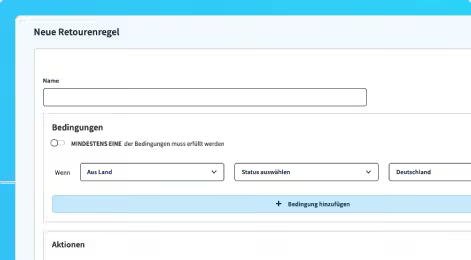
One platform, different merchant needs
Different policies
Some merchants want to charge for returns; others want paperless options and flexible rules.
Different operations
Home collection and international shipments introduce different operational and customer journeys.
Build flexibility into the return journey
The challenge was not simply to add features to an existing product. Merchants have different policies and needs: some want to charge for returns, others want to offer paperless options, and many need to manage home collection or cross-border shipments. The platform needed to support these different journeys and help merchants configure an experience that suited their business.
Make room for different return journeys
Capability | What it supports |
|---|---|
Paid returns | Merchant policies that charge for a return |
Paperless QR codes | Returning without printing a label |
Configurable rules | Experiences suited to each merchant's business |
Home collection | Collection as an alternative to dropping off a parcel |
International returns | Cross-border return journeys |
Merchant branding | A returns experience that fits the merchant's customer experience |
Product, design and engineering moved together
Decoders worked with product, design and engineering stakeholders to identify priorities and turn them into improvements that could be delivered in manageable steps. This collaboration connected product experience decisions with implementation work. Features developed included paid returns, QR-code returns without a printed label, configurable return rules, home collection and international returns. Branding improvements also helped merchants make the returns process fit more naturally with their own customer experience.

A shared product-delivery loop
Understand merchant needs with product, design and engineering stakeholders.
Identify priorities and connect experience decisions to implementation.
Deliver improvements in manageable steps.
Strengthen shared foundations so new capabilities can be integrated consistently.
Make change easier to sustain
The work also strengthened the technical foundations needed to keep evolving the product. Decoders contributed to modernising the frontend, improving shared components and strengthening automated testing. These changes helped developers work with greater confidence when making updates. For a product that continues to grow, better shared components and automated validation make it easier to integrate new capabilities more consistently.
Stronger product foundations
Modern frontend and shared components
Modernisation and reusable components supported more consistent implementation.
Automated validation
Stronger testing helped developers make updates with greater confidence.
+103% return volume in 2022
Reported in Sendcloud's published case study. This is product-growth context during the engagement, not a measure of Decoders' standalone impact.
The growth figure needs context
Sendcloud’s published case study reports that return volume increased by 103% in 2022. This provides context for the product’s growth during the period of the engagement. It does not mean that growth can be attributed solely to Decoders’ work: multiple teams and business factors were involved. Decoders’ contribution focused on product development and improving the technical foundations.
Flexible customer journeys, stronger foundations
The value to Sendcloud was progress towards a more flexible returns platform for merchants and their customers, alongside stronger internal foundations for continued delivery. The project shows how product development, cross-functional collaboration and investment in the technical foundations can support the evolution of a service used at scale.
A similar challenge?
Talk through what needs to change, what needs to keep working and a practical place to begin.